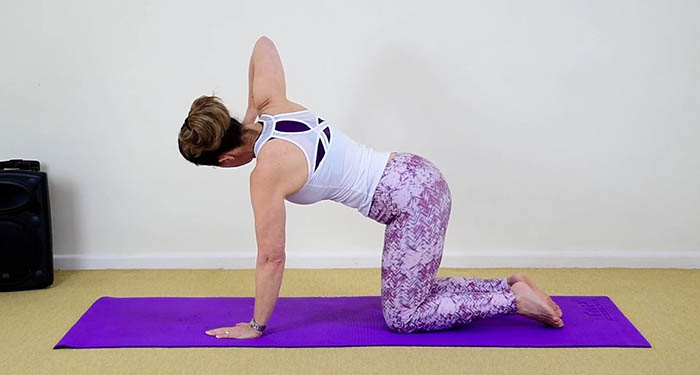

Strengthening your Pelvis and Shoulders
In order to develop a strong back, we must also strengthen the muscles which support and articulate connected structures, primarily the shoulder girdle and the pelvis. In the case of the pelvis, we need to ensure our leg muscles are strong enough to enable us to stand...
Improving Back Mobility and Flexibility
In this section, we will go through a range of exercises designed to mobilise the back, which means to allow each joint to move freely within its intended range of motion. Mobility work includes both the stretching of muscles, and exercises designed to increase range...
Strengthening your Back
In this section, we will go through a range of exercises for your back, designed to strengthen muscles weakened due to previously poor posture, inactivity, or after injury. A strong back is a more comfortable back, and also reduces the risk of future problems. As with...
Correcting your Posture
It is essential for back health to keep your body in its correct natural alignment; we call this good posture. If all parts of your body are correctly aligned, your spine will also be in its correct position, forming its correct natural curve. On the other hand, if...Jane Mackenzie M.A.
Level 4 Pilates Instructor
Level 4 Pilates Therapist
Telephone: 07703 792388
Email: j@janem.co.uk
 Jane on WhatsApp